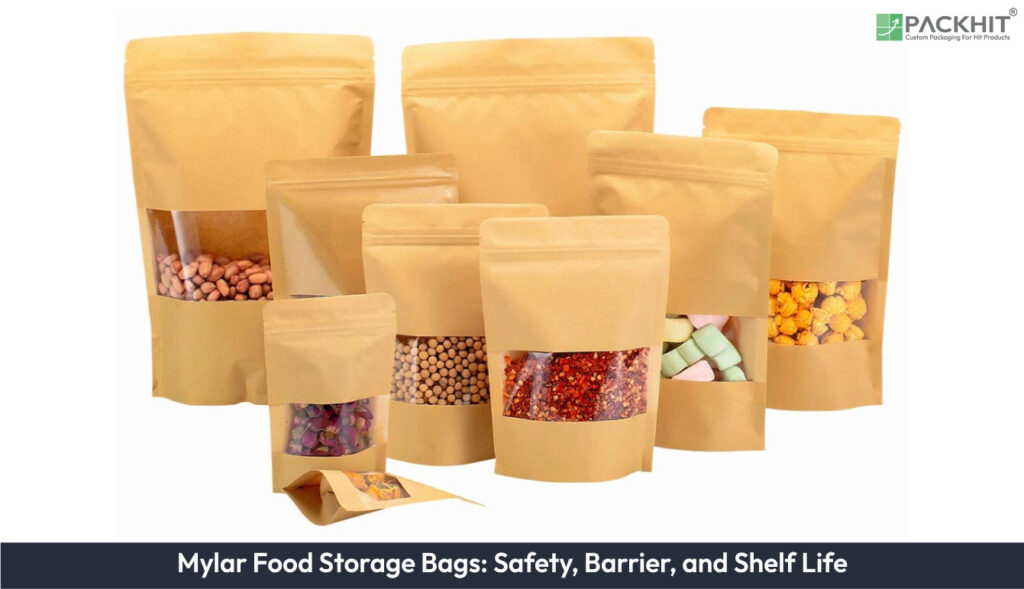
Mylar food storage bags are durable containers made primarily from biaxially-oriented polyethylene terephthalate (BoPET), designed to protect food from air, moisture, and light, thus preserving its freshness and nutritional value. These bags feature strong barrier properties enhanced by additional layers such as aluminum foil, offering low permeability to oxygen and moisture. Their heat-sealing capability and compatibility with oxygen absorbers ensure airtight storage, reducing spoilage and microbial growth. Made from FDA-approved materials, they comply with food safety standards and retain performance in extreme temperatures (-40°F to 300°F) and humid conditions.
Mylar bags are ideal for long-term storage of dry foods like rice, pasta, and freeze-dried meals, and are commonly used in emergency food supplies and specialized applications. When compared to other packaging materials, they outperform plastic in preservation, are lighter than glass or metal, and offer greater flexibility, though may lack the rigidity of hard containers.
- What Are Mylar Food Storage Bags?
- What are Mylar Food Storage Bags Made Of?
- How Mylar Bags Maintain Food Safety
- What Barrier Properties Do Mylar Bags Offer?
- Performance of Mylar Bags in Extreme Conditions
- Chemical Resistance and Humidity Tolerance
- Applications in Specialized Storage
- How Do Mylar Bags Extend Shelf Life?
What Are Mylar Food Storage Bags?
Mylar food storage bags are specialized containers designed to protect and preserve food by limiting exposure to environmental factors such as air, moisture, and light. These bags are constructed from biaxially-oriented polyethylene terephthalate (BoPET), a material known for its durability and exceptional barrier properties. They are commonly used in food packaging applications that require long-term storage and contamination prevention. By creating a sealed environment, Mylar bags help maintain the quality, freshness, and nutritional value of stored food items over extended periods.
What are Mylar Food Storage Bags Made Of?
Mylar food storage bags are primarily composed of biaxially-oriented polyethylene terephthalate (BoPET), a polyester film known for its durability and barrier properties. The manufacturing process involves stretching the film in both the machine and transverse directions, enhancing its tensile strength and dimensional stability. The material is often laminated with aluminum foil or other polymer layers to improve its impermeability to gases and light. Thicknesses typically range from 3.5 mils to 7 mils, with thicker variants offering superior puncture resistance and barrier performance.
How Mylar Bags Maintain Food Safety
Mylar food storage bags ensure food safety through their non-reactive material composition and the creation of an airtight environment. These bags are made from biaxially-oriented polyethylene terephthalate (BoPET), a chemically stable material that minimizes the risk of leaching harmful substances into food. Their heat-sealing capabilities form a hermetic seal, effectively blocking the entry of external contaminants such as bacteria, mold, and pests. Additionally, the use of oxygen absorbers within the sealed bags eliminates residual oxygen, further reducing the likelihood of spoilage and microbial growth.
Regulatory Compliance
Mylar bags designed for food storage are typically manufactured from FDA-approved materials, ensuring they meet stringent food safety standards. However, manufacturers should confirm that the specific Mylar bags they use comply with all relevant regulatory requirements for their intended application. This includes verifying certifications such as FDA compliance for food contact and ensuring that the manufacturing process adheres to best practices for food-grade packaging.
What Barrier Properties Do Mylar Bags Offer?
Mylar bags provide exceptional barrier properties against moisture, oxygen, and light, which are critical factors in food preservation. The metallized layer, often aluminum, reflects light and acts as an additional barrier to oxygen and water vapor. The permeability rates for oxygen and moisture are typically below 0.1 cc/m²/day and 0.01 g/m²/day, respectively, depending on the bag’s thickness and construction.
Performance of Mylar Bags in Extreme Conditions
Mylar bags demonstrate consistent barrier performance across a broad range of temperatures, making them highly versatile for various storage applications. Specifically, they retain their protective properties in temperatures as low as -40°F, suitable for freezing food items, and up to 300°F, accommodating high-heat scenarios such as sterilization processes. This thermal stability ensures the bags do not warp, crack, or compromise their airtight seal, which is critical for maintaining food freshness in fluctuating environments.
Chemical Resistance and Humidity Tolerance
The chemical resistance of Mylar bags further enhances their reliability in environments with high humidity or exposure to volatile organic compounds (VOCs). Their non-reactive material composition prevents degradation or contamination when exposed to moisture or chemicals, ensuring the stored food remains unaffected. This makes them suitable for use in industrial settings or regions with humid climates, where packaging integrity is often challenged.
Applications in Specialized Storage
Given their durability under extreme conditions, Mylar bags are frequently used for specialized storage applications, including emergency food supplies, pharmaceutical products, and sensitive materials requiring stable environments. Their ability to maintain barrier properties under stress makes them a preferred choice for long-term preservation and transport across diverse conditions.
How Do Mylar Bags Extend Shelf Life?
Mylar bags extend the shelf life of food by creating a controlled environment that limits exposure to oxygen, moisture, and light—three primary factors contributing to spoilage. Their airtight seals, combined with the use of oxygen absorbers, effectively reduce oxidative reactions and microbial activity, preserving the food’s quality and nutritional value for extended periods.
Barrier Properties
The shelf-life extension achieved through Mylar bags stems from their exceptional barrier properties. By blocking external elements such as air and humidity, they prevent the degradation of food caused by oxidation, mold growth, and moisture absorption. Additionally, their reflective layer shields food from light-induced chemical reactions, further maintaining freshness.
Optimal Storage Conditions
To maximize the shelf life of food stored in Mylar bags, it is essential to maintain optimal conditions. These include a cool, dry, and dark storage environment, as well as the inclusion of oxygen absorbers to eliminate residual oxygen inside the bags. Under such conditions, dried foods like grains, beans, and powdered products can remain viable for up to 25 years.
Examples of Suitable Foods
Mylar bags are particularly effective for storing dehydrated and low-moisture foods, such as rice, pasta, flour, and freeze-dried meals. They are also suitable for sensitive items like coffee and spices, which benefit from protection against air and moisture. However, foods with high moisture content may require vacuum-sealing and freezing for optimal preservation.
What Types of Food Are Best Stored in Mylar Bags?
Mylar bags are particularly effective for storing non-perishable and dehydrated foods, including rice, pasta, flour, and freeze-dried meals. Their barrier properties also make them suitable for sensitive items like coffee, spices, and pharmaceutical powders. However, high-moisture foods are not recommended unless vacuum-sealed and frozen.
How Do Mylar Bags Compare to Other Packaging Materials?
Compared to traditional plastic bags, Mylar bags offer superior barrier properties and longer shelf life. Unlike glass or metal containers, they are lightweight and flexible, making them easier to store and transport. However, they may be less durable than rigid packaging options in certain scenarios.
