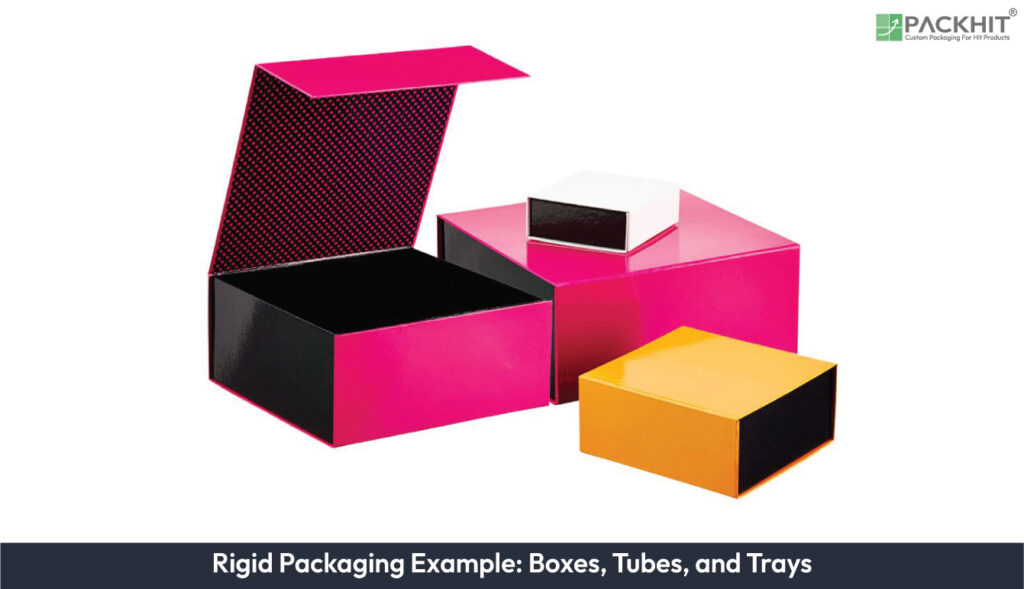
Rigid packaging comprises three primary formats: boxes, tubes, and trays. Boxes (folding cartons, set‑up boxes, die‑cut cartons) give structural protection and high printability. Tubes (paperboard, composite, rigid plastic) secure cylindrical goods and add barrier properties. Trays (molded pulp, thermoformed plastic, paperboard) organize components and absorb shock.
Manufacturers in FMCG, luxury, electronics, and pharmaceuticals use rigid packaging to protect products and present brand information. Examples include Coca‑Cola (printed corrugated cartons for multipacks), Ferrero (molded pulp trays), Gucci and Louis Vuitton (set‑up boxes with branded finishes), Apple and Samsung (die‑cut cartons and anti‑static trays), and Pfizer and Johnson & Johnson (laminated cartons and rigid trays for medical components).
What are the Examples of Rigid Packaging?
Rigid packaging formats are often designed in such a way that they can help provide structural integrity and durability. This makes them usually suitable for food, cosmetics, electronics, and pharmaceuticals. Boxes offer versatile designs for storage and shipping. Tubes provide precision for cylindrical items, while trays enable efficient organization and protection for products like posters, powdered beverages, cosmetics, and medical components. The three key examples of rigid packaging are given below:
1. Rigid Boxes
Rigid boxes are a popular choice for durable packaging, offering strong structural integrity for many product formats. Rigid boxes can typically be made from high-quality materials such as corrugated fiberboard, paperboard, or rigid plastics, which are intended to resist deformation. Their robust construction makes them ideal for protecting products during transit, storage, and retail display. Best when premium presentation and maximum protection matter, but it may be overkill for lightweight items where cost and packing efficiency are the priority.
While their structural integrity remains a defining trait, rigid boxes frequently appear in diverse formats across multiple industries. The following primary configurations illustrate their versatility:
Folding Cartons
Folding cartons, constructed from paperboard, are lightweight and ideal for retail packaging. Folding cartons offer excellent printability, enabling manufacturers to include branding elements, product information, and promotional graphics. Widely used in industries such as food, cosmetics, and pharmaceuticals, folding cartons provide an economical yet visually appealing packaging option for lightweight products.
Rigid Set-Up Boxes
Crafted from sturdy materials like paperboard, rigid set-up boxes are often used to package luxury goods, electronics, and high-value items. Rigid set-up boxes are known for their premium design and durability. Common features include magnetic closures, velvet linings, and premium finishes like foil stamping and embossing. Their rigid construction enhances product protection, while their elegant appearance reinforces brand prestige.
Die-Cut Boxes
Die-cut boxes are precision-engineered to fit specific product dimensions, offering customized solutions for industries such as food, consumer electronics, and cosmetics. Die-Cut boxes are often paired with inserts or foam padding to ensure product stability and protection during transit. Their design flexibility can help manufacturers to create tailored packaging that balances functionality with aesthetic appeal.
2. Rigid Tubes
Rigid tubes are cylindrical packaging solutions designed for strength, precision, and aesthetic appeal. They are commonly constructed from materials such as paperboard, composite materials, and rigid plastics, each selected to meet functional and industry requirements. Rigid tubes provide a robust and durable structure, ensuring the safe containment of products during storage, transportation, and display.
Examples of Rigid Tubes
Rigid tubes are versatile cylindrical packaging solutions designed to meet various functional and aesthetic requirements. Below are examples of common types of rigid tubes, each tailored to specific applications:
Paperboard Tubes
Paperboard tubes, often spiral-wound, are lightweight yet durable solutions. They are ideal for packaging items like posters, cosmetics, and dry foods. Their smooth surfaces allow for vibrant printing, enhancing branding opportunities while maintaining structural integrity during transit and storage.
Composite Tubes
Composite tubes are particularly suited for packaging food products like powdered beverages and pharmaceuticals, where protection against environmental factors is critical. They combine paperboard with layers of metal or plastic, which assist in enhancing barrier properties such as moisture resistance.
Rigid Plastic Tubes
Rigid plastic tubes can provide strong rigidity and good clarity for applications where visibility matters, making them ideal for applications that require durability and product visibility. Commonly used for packaging premium cosmetics, such as creams and lipsticks, rigid tubes align with both functional needs and high-end branding requirements.
3. Rigid Trays
Rigid trays are essential components of durable packaging, offering flat, open designs that prioritize organization, protection, and accessibility. Rigid trays are commonly constructed from materials such as molded pulp, thermoformed plastic, and paperboard, each chosen for its specific functional attributes and industry applications.
Rigid trays are versatile packaging solutions that can help provide structural integrity, organization, and accessibility. Below are examples of rigid trays categorized by material type and their respective applications:
Molded Pulp Trays
Molded pulp trays are made from recycled paper fibers, which may help support lower-impact positioning. Rigid trays provide excellent shock-absorbing properties, making them ideal for protective packaging in industries such as food service and electronics. Their sustainable composition aligns with environmentally conscious production practices.
Thermoformed Plastic Trays
Thermoformed plastic trays are widely used in retail displays and medical device packaging, where visibility and structural integrity are essential. They are precision-formed to offer clarity, rigidity, and durability. Rigid trays are particularly valued for their custom fit and ability to protect fragile items.
Paperboard Trays
Paperboard trays, often laminated for added durability, offer a balance of lightweight construction and structural strength. Rigid trays are versatile and used in various applications, such as food packaging and product organization. Laminations can improve moisture resistance and enhance the tray’s overall functionality.
Which Brands Use Rigid Packaging?
Many major brands use rigid packaging to protect products and present brand information during storage, transport, and retail display.
- Coca-Cola uses printed corrugated and laminated paperboard cartons for multipacks and seasonal promotional packs to protect bottles and support automated pallet handling.
- Ferrero uses molded pulp trays and rigid boxes to separate confections, reduce movement, and maintain retail presentation for fragile chocolates.
- Gucci uses set-up rigid boxes with magnetic closures, fabric lining, and foil stamping to protect leather goods and signal product provenance at retail.
- Louis Vuitton uses rigid boxes and structured cartons with reinforced corners and branded finishes to protect high-value items and support premium shelf display.
- Apple uses die-cut rigid cartons with custom paperboard or foam inserts that secure devices, limit relative motion, and match automated packing lines.
- Samsung uses corrugated rigid boxes and anti-static trays for electronics and components to protect them during distribution and to comply with handling protocols.
- Pfizer uses rigid trays and laminated cartons for medical devices and blister packs to provide compartmentalization, tamper evidence, and barrier properties.
- Johnson & Johnson uses paperboard tubes, rigid trays, and laminated cartons for consumer health products and medical supplies to control moisture and organize components.
How to Select the Right Rigid Packaging for the Product?
Selecting the ideal rigid packaging involves balancing product safety with the brand’s narrative. Before finalizing the choice, consider the three rigid core pillars:
- Functional Requirements: Assess the level of protection the product needs against environmental factors like moisture, shock, and compression. If the item is fragile or high-value, prioritize options like rigid set-up boxes with custom inserts.
- Brand Experience: Think about the unboxing journey. Materials like premium paperboard or features like magnetic closures signal quality and care to the end consumer, helping to differentiate the brand on the retail shelf.
- Logistical Efficiency: Consider the distribution chain. Durable, stackable formats like corrugated boxes or custom-fitted trays can optimize warehouse storage and ensure that the product arrives in pristine condition.
By aligning these factors with the specific product needs, it is possible to choose a packaging solution that does more than just contain. It can help add value to the product and protect the brand’s reputation.