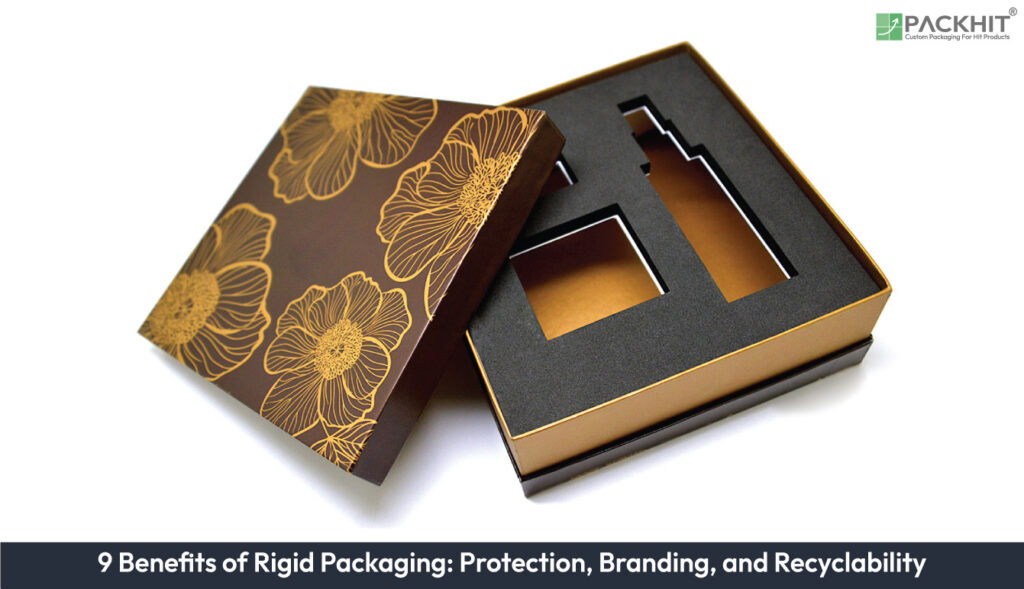
Rigid packaging offers a wide range of benefits. These benefits can enhance both functionality and customer experience. Its durable protective strength and robust structural integrity can assist in safeguarding fragile and high-value items like medical devices and electronics during transit and storage. These features can contribute to superior product safeguarding, preserving quality, and minimizing damage. Businesses can leverage customizable brand identity options like embossing and foil stamping to create a distinct market presence. Rigid packaging’s premium finish can support an unboxing experience for products like cosmetics and luxury goods. This helps reinforce presentation and improve perceived customer satisfaction. Precision-engineered friction-fit telescoping lids use air-pressure resistance to slow and control lid opening, creating a deliberate opening tempo. Structural mechanisms such as magnetic closures and custom inserts provide secure fastening and organized presentation, respectively. With recyclable and eco-friendly materials and innovations, it can support sustainability goals while maintaining a premium appeal. The packaging’s strength can also help reduce product waste and optimize warehouse efficiency, offering practical benefits in logistics and stock management.
9 benefits of rigid packaging are listed below:
- 1. Durable Protective Strength
- 2. Robust Structural Integrity
- 3. Enhanced Product Presentation
- 4. Customizable Brand Identity
- 5. Structural and Sensory Quality Benchmarks
- 6. Recyclable Materials
- 7. Reduced Product Waste
- 8. Eco-Friendly Material Innovations
- 9. Optimized Storage Efficiency
- How to Choose the Right Rigid Packaging?
1. Durable Protective Strength
Durable protective strength is a primary advantage of rigid packaging, which is meticulously crafted using 1200gsm rigid paperboard, offering a specific density that can help ensure the box remains puncture-resistant and prevents internal movement. This structural integrity ensures products remain secure during transit and storage, minimizing the risk of damage to fragile or high-value items. Maintaining this protection relies on proper storage, as humidity control is essential to prevent moisture-induced weakening or board delamination. This reliability translates into reduced losses and enhanced product quality preservation, making rigid packaging an indispensable choice for tech manufacturers.
2. Robust Structural Integrity
Robust structural integrity is a defining feature of the rigid packaging composition. It offers a high-density chipboard shell and internal bracing specifically engineered for heavy-duty glassware to help prevent compression failure. Unlike flexible packaging alternatives, rigid packaging retains its shape under stress, preventing deformation and ensuring secure containment of items with precise dimensions, such as medical devices or premium electronics. A practical constraint for this format involves adhering to stacking limits, as exceeding design specifications can lead to deformation or compression failure. This consistency in form and function provides manufacturers with a reliable solution tailored to meet stringent product safety requirements.
3. Enhanced Product Presentation
Enhanced product presentation is achieved by applying a soft-touch matte lamination, which creates a tactile experience that signals premium quality to the consumer immediately upon contact. The reinforced structure ensures items are protected from external forces, while premium finishes, achieved through techniques like offset printing, embossing, and foil stamping, enhance the perceived value of the product. To maintain this appearance, surface care is required to avoid abrasive handling that causes scuffing or cracking of premium finishes. Prototype validation for ink and foil adhesion is also essential to ensure quality and durability during production runs. By combining structural reliability with high-end aesthetics, rigid packaging transforms products into premium offerings that meet both functional and branding expectations.
4. Customizable Brand Identity
Customizable brand identity is supported as rigid packaging typically provides extensive customization options for businesses to align their packaging with specific brand attributes. Techniques such as embossing, debossing, foil stamping, and spot UV coating allow brands to build complex designs that communicate exclusivity and attention to detail. For instance, luxury watchmakers often employ rigid boxes with premium textures and metallic accents to reinforce their high-end positioning. Rigid packaging supports precise color matching and logo placement, ensuring consistency across product lines and enhancing brand recognition in competitive markets.
5. Structural and Sensory Quality Benchmarks
Structural and sensory quality benchmarks are established when the rigid structure of premium packaging transforms the unboxing experience through deliberate, high-quality structural design. Precision-fit telescoping lids create a gentle, controlled opening resistance that can highlight excellent manufacturing quality, while integrated magnetic closures help provide a distinct, high-frequency “snap” that gives the consumer an immediate, satisfying sense of security; however, these features require stable storage temperatures, as fluctuations can sometimes cause magnets to lose tension or lids to misalign. Beyond the exterior, custom-fitted pulp or foam inserts hold products firmly in place to protect them against movement and vibration, ensuring the item arrives in perfect condition and reinforcing the brand’s commitment to technical precision and reliable protection
6. Recyclable Materials
Rigid packaging is typically made from materials such as thick paperboard and corrugated cardboard, both of which can be recycled and sourced from renewable resources. These materials may be recyclable depending on local recycling streams, significantly reducing landfill contributions. Full-package recyclability depends on minimizing contaminants, as embedded components like magnets, heavy foil, or permanently bonded plastic films can interfere with recovery streams. Some manufacturers use FSC-certified paperboard when available, ensuring sustainable forestry practices. This alignment with eco-friendly packaging preferences not only meets regulatory requirements but also appeals to environmentally conscious consumers, making it a strategic choice for businesses aiming to enhance their sustainability profiles without compromising on quality or functionality.
7. Reduced Product Waste
Reduced product waste is a significant benefit, as the robust construction of rigid packaging usually helps minimize losses through customized internal engineering. For instance, in the cosmetics sector, custom-molded inserts drastically reduce breakage rates during shipping compared to standard loose-fill packaging. This durability can contribute to waste reduction, as fewer products are discarded due to spoilage or breakage. Additionally, manufacturers benefit from increased efficiency and cost savings by minimizing product returns and replacements caused by inadequate packaging.
8. Eco-Friendly Material Innovations
Eco-friendly material innovations mean rigid packaging can achieve true sustainability when material science replaces petroleum with biopolymers like PHA, which can biodegrade in standard marine and soil environments without leaving microplastics. With the ability to naturally decompose, these materials significantly reduce environmental impact while maintaining the structural integrity required for product protection. Businesses adopting these innovations align with stringent environmental regulations and meet the expectations of eco-conscious consumers. Examples typically include packaging made from plant-based polymers and recycled paperboard, both of which can help lower carbon footprints and enhance brand reputation. This approach not only satisfies sustainability goals but also delivers high-quality, durable packaging solutions suitable for modern industries.
9. Optimized Storage Efficiency
Optimized storage efficiency is enabled by rigid packaging, which can help enhance organization through its stackable design and durable structure. This can maximize space utilization during transportation and warehousing. Unlike flexible packaging that may collapse under pressure, rigid packaging maintains its form, ensuring products are stored securely and uniformly. This organization reduces handling time and minimizes the risk of damage caused by improper stacking. For manufacturers, optimized storage translates into cost savings, streamlined logistics, and better inventory management, making rigid packaging a useful and relevant choice for industries demanding reliable storage solutions.
How to Choose the Right Rigid Packaging?
Selecting the optimal rigid packaging solution requires a strategic synthesis of durability, branding, and operational goals. Use the following guide to match the product needs with the appropriate packaging specifications:
- Evaluating Product Protection: Assess the fragility and weight of the item to determine the necessary material density. For example, high-value electronics often require rigid paperboard and custom-molded inserts to prevent internal movement and help ensure puncture resistance during transit.
- Aligning with Brand Strategy: Define the desired consumer experience by choosing finishes that mirror the brand positioning. High-end products benefit from tactile elements like soft-touch lamination and embossing, or sensory benchmarks such as the auditory “snap” of magnetic closures and the controlled air-pressure resistance of telescoping lids.
- 3. Balancing Logistics and Sustainability: Evaluate the warehousing and environmental commitments. Rigid designs offer superior stackability for storage efficiency, which should be paired with sustainable material choices, such as FSC-certified boards or biodegradable biopolymers, to meet both logistical demands and modern eco-friendly standards.