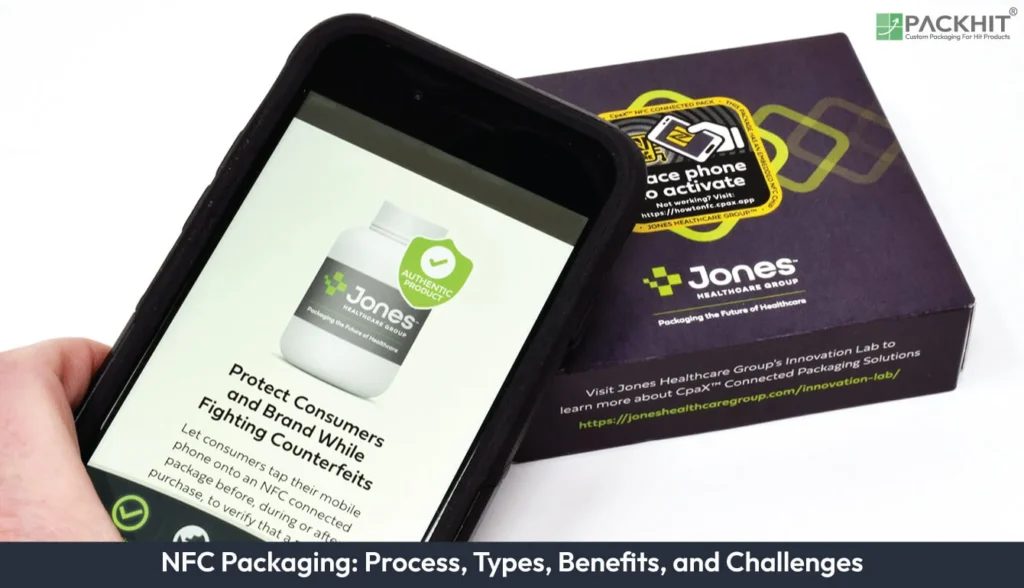
NFC packaging uses an embedded NFC chip to communicate with nearby NFC-enabled devices. NFC chip works in the sequence of activation first, then data exchange, and finally a response at the end. While NFC packaging can offer significant advantages, such as enhanced security, consumer engagement, supply chain optimization, and sustainability, it may also cause some challenges like cost implications, sustainability, technological compatibility, and durability concerns. Applications of NFC packaging often span industries including pharmaceuticals, food and beverage, and luxury goods, with use cases ranging from anti-counterfeiting measures to personalized marketing campaigns.
- What is NFC Packaging?
- How Does NFC Packaging Work?
- Types of NFC Packaging
- Embedded Inlays (Hidden Integration)
- Adhesive NFC Stickers (Applied Tags)
- Printed NFC Labels (Integrated Graphic Tags)
- Tamper-Evident Strips (Security Seals)
- Sensor Modules (Active Monitoring)
- Benefits of NFC Packaging
- Challenges of NFC Packaging
- What are the Use Cases for NFC Packaging in Industries?
- Pharmaceutical Applications
- Food and Beverage Industry
- Luxury Goods and Cosmetics
- Retail and E-Commerce
- How Does NFC Compare to RFID in Packaging?
What is NFC Packaging?
NFC packaging is the integration of NFC technology into packaging materials, allowing for wireless communication between the packaging and compatible devices. NFC, a subset of radio-frequency identification (RFID), can often operate within a range of approximately 10 centimeters (varying by device and conditions) and can facilitate one-way or two-way data exchange. The core components of NFC packaging often include an NFC chip or inlay, which can be embedded into the packaging structure, and a reader device, typically a smartphone or specialized scanner.
How Does NFC Packaging Work?
NFC packaging can operate through a clear sequence of steps that can help ensure seamless communication between the embedded NFC chip and an NFC-enabled device. These steps of activation, data exchange, and response form the foundation of its functionality.
- Activation: The activation begins when an NFC-enabled device, such as a smartphone or a dedicated scanner, comes within the range of the NFC chip embedded in the packaging. This proximity activates the chip, which can be designed to function without an internal power source. Instead, it can draw energy from the electromagnetic field generated by the reader device. This activation step initiates the communication process between the packaging and the device.
- Data Exchange: Once activated, the NFC chip exchanges pre-stored data with the reader device. This data can often be encoded in the form of unique identifiers, product-specific details, or interactive content such as URLs or multimedia files. The data exchange can occur within a 10-centimeter range and can be either one-way, where information is sent from the chip to the device, or two-way, enabling bidirectional communication for more complex interactions, such as updating product records in a connected database.
- Response: After the data successfully transmits, the NFC-enabled device responds by processing and displaying the information. The response may vary depending on the use case. For example, it may verify product authenticity, provide access to digital content like user manuals or promotional offers, or interact with a cloud-based system to update inventory levels. In some applications, the response helps enable real-time feedback to the packaging system, helping enable dynamic features such as temperature monitoring.
Note: While NFC Packaging offers seamless interaction, important considerations involve cost, technical limits, and security vulnerabilities that can disrupt performance. Chips and antennas can add more money to production than normal print or standard barcodes. Phones must touch or sit within a few centimeters of the tag to work. Passive chips may hold tiny amounts of data, not large files or heavy media
Material Composition and Integration
NFC chips are typically embedded into paper-based or flexible packaging materials during the manufacturing process. The integration process often involves laminating the NFC inlay between layers of packaging material or embedding it directly into the structural design. This can help ensure durability while maintaining the aesthetic and functional integrity of the packaging.
Types of NFC Packaging
The five primary types of NFC packaging solutions are embedded inlays, adhesive NFC stickers, printed NFC labels, tamper-evident strips, and sensor modules:
Embedded Inlays (Hidden Integration)
These are NFC chips inserted directly into folding cartons, rigid boxes, or molded pulp during the manufacturing phase. Because they are entirely concealed within the structural layers of the packaging, they leave the external surface perfectly smooth.
Ideal for luxury goods where the consumer experience should remain focused on design and material feel rather than seeing a tech label. They are protected from physical wear and tear because they are enclosed.
Adhesive NFC Stickers (Applied Tags)
These are flexible, self-adhesive tags that are applied to the exterior of a package. Unlike embedded inlays, these are usually added as a secondary step after the primary packaging is already formed.
These offer the most flexibility. They can be applied to diverse materials like glass, plastic, or paper without altering the original box manufacturing process. This makes them a cost-effective choice for smaller product batches or when you want to add NFC functionality without a major redesign.
Printed NFC Labels (Integrated Graphic Tags)
In this method, the NFC antenna is integrated directly into the packaging artwork using standard printing processes like offset or digital printing. The chip is mounted onto this printed antenna, creating a very thin, low-profile label.
These are excellent for mass-production environments. They provide a seamless look that integrates with your branding. Because the antenna is essentially “inked” onto the package, it keeps the label profile very low, reducing the risk of the tag being peeled off or snagged during shipping.
Tamper-Evident Strips (Security Seals)
These labels feature delicate circuits that span the opening of a package. The moment the seal is torn or the package is opened, the internal circuit is physically broken.
This is essential for high-security applications like pharmaceuticals, luxury fashion, or electronics. It provides instant verification that the product inside has not been accessed or counterfeited, significantly increasing consumer trust and reducing shrinkage in the supply chain.
Sensor Modules (Active Monitoring)
These are advanced NFC tags equipped with micro-sensors that go beyond simple identification. They can detect and record changes in environmental conditions, such as temperature, humidity, light exposure, or physical impact.
This is the gold standard for cold-chain logistics and perishable goods. By scanning the package, a warehouse worker or customer can retrieve a digital log of the item’s condition during transport. It ensures that products requiring specific environmental controls haven’t been compromised during transit.
Benefits of NFC Packaging
The benefits of NFC packaging are enhanced security, consumer engagement, supply chain optimization, and sustainability.
Enhanced Security
NFC packaging can help incorporate robust anti-counterfeiting measures by embedding unique identifiers within NFC chips, which can help verify authenticity when the tag data and reader system are configured to support it. This technology is particularly valuable in industries like pharmaceuticals and luxury goods, where counterfeiting poses significant risks. For instance, pharmaceutical companies usually employ NFC tags to confirm the legitimacy of injectable medications, safeguarding consumers against counterfeit products.
Consumer Engagement
NFC-enabled packaging transforms the consumer experience by offering interactive features that are accessible through a simple tap of an NFC-enabled device. These features include instant access to product specifications, promotional content, or brand stories. As an example, luxury goods brands often use NFC-enabled packaging to deliver exclusive digital experiences, such as behind-the-scenes videos or loyalty rewards, enhancing the emotional connection between the consumer and the brand.
Supply Chain Optimization
The integration of NFC technology streamlines supply chain operations by assisting in enabling real-time data collection and end-to-end traceability. Embedded NFC tags can allow manufacturers to monitor product movements from production to delivery. This capability reduces inefficiencies in logistics, minimizes losses, and improves inventory management. For example, companies can use real-time tracking data to proactively address quality issues or optimize delivery timelines.
Sustainability
NFC packaging supports eco-friendly initiatives by reducing reliance on printed materials such as labels, manuals, or promotional inserts. By digitizing this information, NFC technology aligns with minimalistic packaging designs and helps brands achieve their sustainability goals. Additionally, many manufacturers are pairing NFC-enabled packaging with recyclable or biodegradable materials, further contributing to environmental preservation. This dual approach not only reduces waste but also aligns with the growing consumer demand for sustainable products.
Challenges of NFC Packaging
The challenges of NFC packaging include cost implications, scalability, technological compatibility, and durability concerns.
- Cost Implications: The integration of NFC technology may significantly raise production costs, especially for low-margin products, as it can require high-quality components and precise manufacturing processes.
- Scalability: Scaling NFC packaging across extensive product lines may demand substantial investment in infrastructure, including specialized equipment and workforce training, which can deter smaller manufacturers.
- Technological Compatibility: Limited access to NFC-enabled devices among consumers can restrict the usability of interactive features, reducing the overall impact of NFC packaging in certain markets.
- Durability Concerns: Ensuring the NFC chip remains functional throughout the product lifecycle, including during extreme transportation or storage conditions, may pose significant engineering and material challenges.
What are the Use Cases for NFC Packaging in Industries?
NFC packaging can be employed across pharmaceutical applications, the food and beverage industry, luxury goods and cosmetics, and retail and e-commerce.
Pharmaceutical Applications
In the pharmaceutical sector, NFC packaging can be used for medication adherence, temperature monitoring, and anti-counterfeiting. For example, NFC-enabled labels can help verify the authenticity of injectable medications and aid in providing real-time temperature data during transportation.
Food and Beverage Industry
NFC packaging can support enhancing consumer interaction by offering instant access to nutritional information, recipes, or promotional content, such as in the food and beverage industry. Additionally, it can help support traceability initiatives by providing detailed supply chain data.
Luxury Goods and Cosmetics
Luxury goods and cosmetics often utilize NFC packaging for product authentication and personalized marketing. For instance, NFC-enabled perfume boxes can deliver exclusive content, such as brand videos or loyalty rewards, directly to the consumer’s smartphone.
Retail and E-Commerce
In retail and e-commerce, NFC packaging can facilitate interactive shopping experiences by linking physical products to digital platforms. E-commerce companies often use NFC tags to help streamline returns and provide instant access to user manuals or assembly instructions.
How Does NFC Compare to RFID in Packaging?
While NFC is a subset of RFID, it differs in range, functionality, and application. RFID systems can typically operate over longer distances and are used for bulk tracking in supply chains. In contrast, NFC can be designed for close-range interactions, making it ideal for consumer-facing applications such as authentication and engagement. The choice between NFC and RFID depends on the specific requirements of the packaging solution.