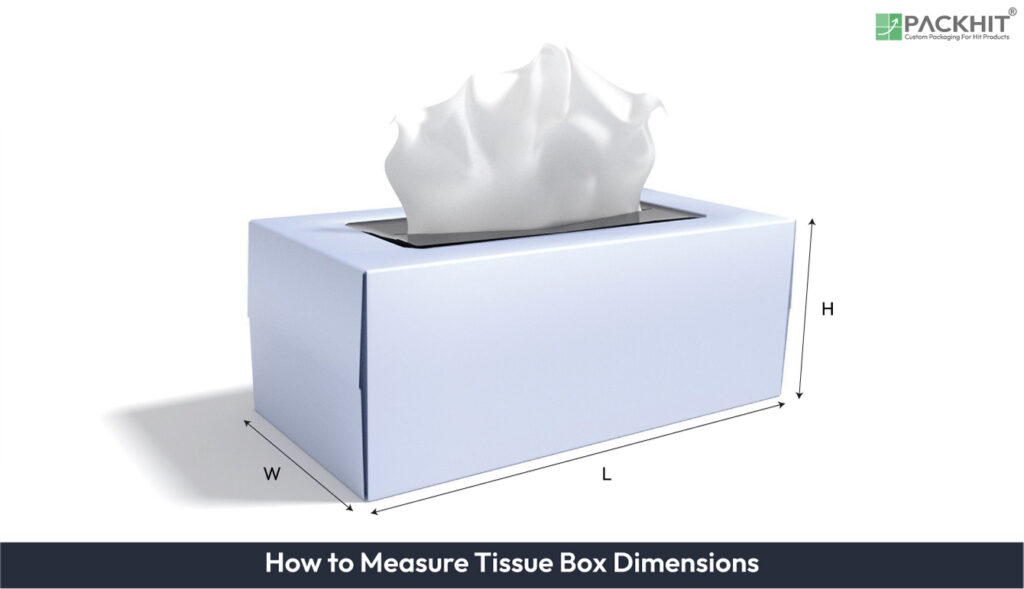
To accurately measure tissue box dimensions, start by identifying the box shape, as this determines the measurement method. Use a precise measuring tool like a ruler or caliper, ensuring it’s placed flush against the surface. Measure the length, width, and height based on the box shape, and account for material thickness to obtain internal dimensions. Standard tissue boxes come in rectangular, square, and flat forms with defined size ranges, while custom boxes may vary based on branding or functionality. Factors like tissue count, material thickness, and dispensing mechanism influence box size, and custom dimensions require special design considerations, including volume optimization and unique shapes.
- 1. Identify the Box Shape
- 2. Select a Measuring Tool
- 3. Measure Length
- 4. Measure the Width
- 5. Measure the Height
- Why are Accurate Tissue Box Dimensions Important?
- Common Tissue Box Dimensions by Type
- Rectangular Tissue Boxes
- Square Tissue Boxes
- Flat Tissue Boxes
- Can Tissue Box Dimensions be Customized?
- What are the Factors that Influence Tissue Box Dimensions?
- Custom Tissue Box Dimensions
- Is it Important to Measure Internal Dimensions of a Tissue Box?
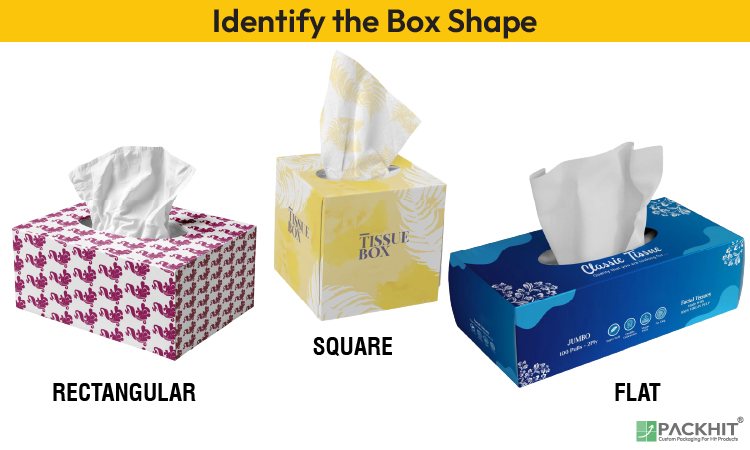
1. Identify the Box Shape
Determine whether the box is rectangular, square, or flat. This classification will guide the measurement approach and tools required.
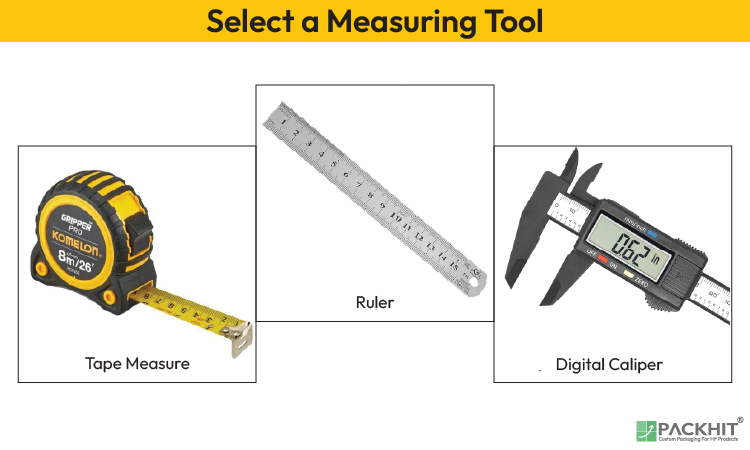
2. Select a Measuring Tool
Employ a ruler, caliper, or measuring tape with a precision of about 0.1 inches (0.25 cm). Ensure the tool is placed flush against the box surface to avoid measurement errors. Precision applies to measurement capture; thickness adjustment applies to the external-to-internal conversion; extra height applies only when a pull-through dispenser creates a clearance requirement.
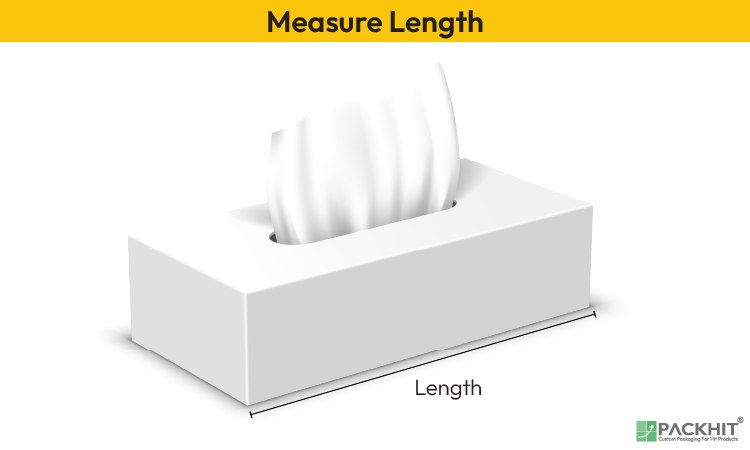
3. Measure Length
Measure the longest external side and record that number as the box length. Use external measurements for logistics and shelving, while relying on internal measurements for product fit. Use a ruler, measuring tape, or digital caliper, such as a 12-inch steel ruler, 300 mm tape, or 150 mm digital caliper. Place the tool flush against the box and align it with the longest straight edge. Read the mark at eye level to avoid parallax error. Use a precision of 0.1 inches (0.25 cm) for packaging purposes.
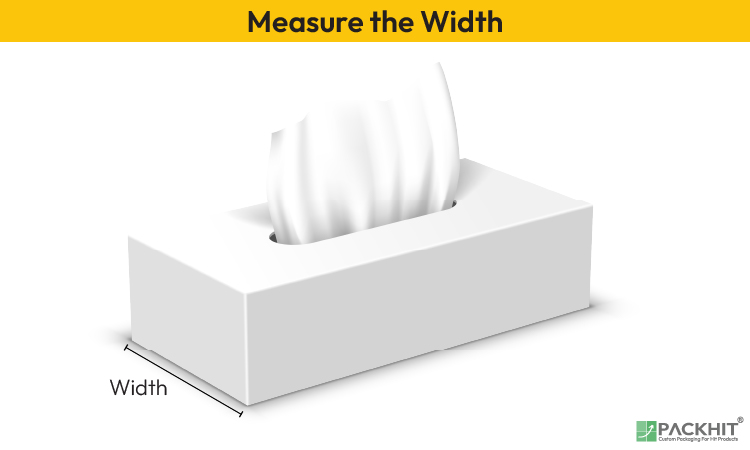
4. Measure the Width
Place the ruler or caliper across the top center and read the distance between outer edges for external width, which is required for shelving. For internal width (product fit), cardboard thickness should be measured directly for accuracy; otherwise, use a standard assumption of 0.075 inches. Subtract twice that amount from the external width.
Example: For an external width of 5.2 inches, subtract 0.15 inches (2 × 0.075) to calculate an internal width of 5.05 inches, then round to 5.1 inches for your design specs.
5. Measure the Height
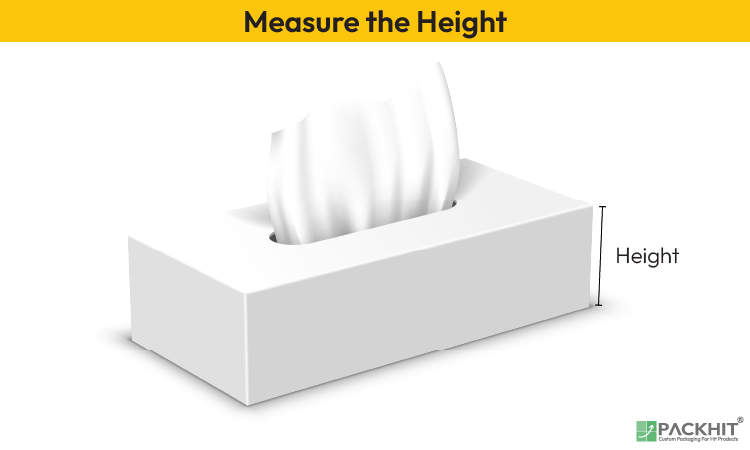
Measure the vertical distance from the box base to the top surface, including any closed lid or dispensing flap. Use the external height for logistics and subtract double the measured or assumed thickness (0.075 inches) for internal fit. If the box uses a pop-up or pull-through dispenser, allow about 5% extra internal height to prevent jams, depending on dispenser fit. Record all dimensions in the same unit and round to the nearest 0.1 inch for design and ordering.
Note: Record the external measurement for shelving first; then derive the internal dimension by subtracting 2× material thickness (unless instructed otherwise for dispenser-type tissue box).
Why are Accurate Tissue Box Dimensions Important?
Accurate tissue box dimensions are important because of various applications, including:
- Ensuring compatibility with retail shelving and storage systems.
- Optimizing packaging for transportation to reduce shipping costs.
- Improving consumer experience through ergonomic and visually appealing designs.
Prioritize external tissue box dimensions for shelving and shipping, and base internal measurements on your product size for a secure fit. Remember to subtract the material thickness from your external measurements; otherwise, your internal space will be smaller than expected, and the packaging may not fit.
Common Tissue Box Dimensions by Type
Tissue boxes are typically categorized into three standard shapes: rectangular, square, and flat. Each shape has distinct dimensional ranges that cater to specific use cases and storage requirements:
Rectangular Tissue Boxes
Rectangular boxes are the most common format, often used for household and office settings. The dimensions for these boxes are approximately 9 inches (22.86 cm) in length, 4.5 inches (11.43 cm) in width, and 2 inches (5.08 cm) in height. These dimensions are optimized for compact storage and easy dispensing of tissues.
Square Tissue Boxes
Square tissue boxes are designed for aesthetic appeal and are frequently used in luxury or decorative settings. Their dimensions typically range from 4.5 inches (11.43 cm) to 5.5 inches (13.97 cm) on each side, with a height of 4.5 inches (11.43 cm). This uniformity in dimensions ensures a balanced visual profile.
Flat Tissue Boxes
Flat boxes are designed for portability and are commonly used in travel or compact storage scenarios. These boxes measure approximately 8.5 inches (21.59 cm) in length, 4.5 inches (11.43 cm) in width, and 1.5 inches (3.81 cm) in height. Their slim profile makes them ideal for tight spaces.
External dimensions mean measuring the size of an object from the very outside edge to the opposite outside edge. To estimate internal dimensions, subtract 2× the measured material thickness from the external measurements. Please note that actual tolerances will vary depending on the specific carton board and dispenser design used.
Can Tissue Box Dimensions be Customized?
Yes, tissue box dimensions can be customized, which allows brands to create unique designs that align with their visual identity and functional needs. This can include unusual shapes like hexagonal, cylindrical, or oversized boxes tailored to specific applications.
What are the Factors that Influence Tissue Box Dimensions?
Several factors determine the dimensions of tissue boxes, including functional requirements, material constraints, and consumer preferences. Understanding these factors is essential for manufacturers aiming to optimize their designs.
Tissue Count and Ply: The number of tissues and their ply (single-ply, two-ply, etc.) directly impact the box’s size. Higher tissue counts or thicker plies require larger boxes to accommodate the increased volume while maintaining structural integrity.
Material Thickness: The thickness of the cardboard or other materials used for the box affects its external dimensions. Thicker materials may add up to 0.1 inches (0.25 cm) to each side, which must be accounted for during the design phase.
Dispensing Mechanism: Boxes with advanced dispensing mechanisms, such as pop-up or pull-through designs, may require additional internal space to ensure smooth operation. This can increase the overall dimensions by up to 5% compared to standard designs.
To ensure quality in your measurement workflow, start by measuring your paper samples and then re-measure after the box is folded to verify the internal space. For accuracy, maintain measurements within 0.02 inches of your target and use simple measuring tools to confirm that the tissue opening is properly aligned. Prioritize safety by smoothing any sharp edges to prevent paper cuts and ensuring the box material is clean and safe for contact. When selecting equipment, use digital calipers to measure the inside of the box, reserving regular rulers or measuring tapes only for checking the flat, unfolded cardboard.
Custom Tissue Box Dimensions
Custom tissue boxes are designed to meet specific branding, functional, or aesthetic requirements. These boxes often deviate from standard dimensions and require specialized measurement and design considerations.
Design Flexibility
Custom boxes can be tailored to unique shapes, such as hexagonal or cylindrical designs, which necessitate advanced measurement techniques and prototyping to ensure accuracy.
Volume Optimization
Manufacturers often calculate the internal volume of custom boxes to ensure they can hold the desired tissue count without compromising usability. This involves integrating the dimensions into volume formulas specific to the box shape.
For custom shapes, ensure tissues fit by using these steps:
- For hexagonal boxes: Measure the distance between parallel sides for tissue width, and between corners to check shelf fit. Use the parallel sides measurement to calculate volume.
- For cylindrical Boxes: Measure the widest diameter and internal height.
- For capacity check: Always use the tightest internal measurement as your limit to ensure tissues fit without getting crushed.
Is it Important to Measure Internal Dimensions of a Tissue Box?
Yes, it is important to know internal tissue box dimensions because accurate dimensions are critical for functionality and logistics. Proper clearance prevents jamming by ensuring tissues pull out smoothly without tearing. Correct sizing of the tissue box stops extra empty air inside, lowering shipping costs. Manufacturers must also take into account the material thickness of tissues to maintain usable volume. Internal dimensions affect how well the box withstands weight during retail display stacking. Lastly, tissue boxes that feel too loose or too tight can frustrate users and affect brand loyalty.