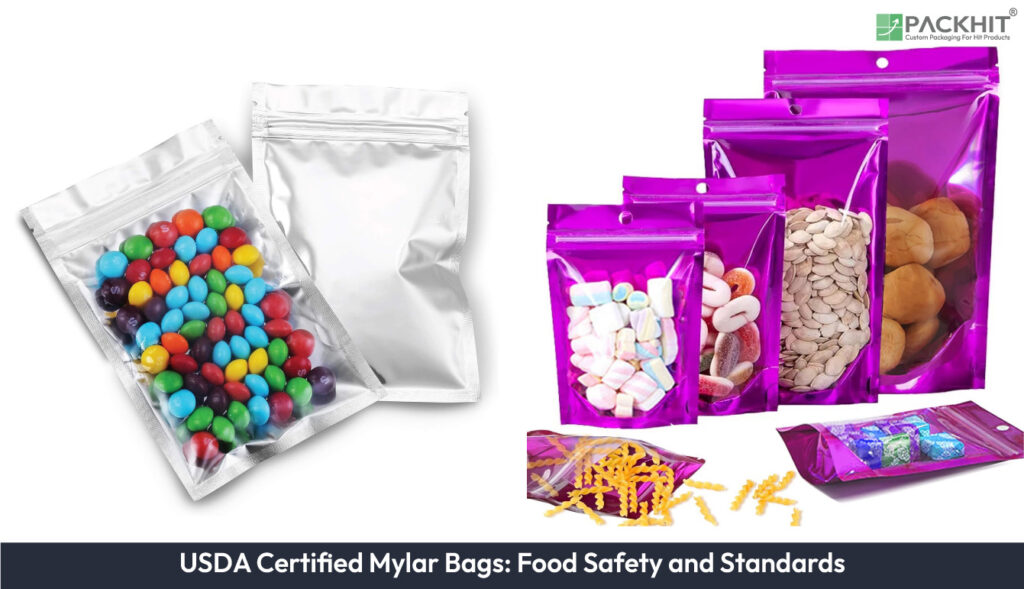
USDA-certified Mylar bags are specialized packaging solutions made from biaxially-oriented polyethylene terephthalate (BoPET) films, designed to meet stringent food safety standards established by the United States Department of Agriculture (USDA). These bags provide robust barrier properties, including protection against oxygen, moisture, and UV light, to ensure the longevity and safety of consumable goods. Their certification process involves rigorous testing for chemical stability, thermal resistance, and non-toxicity, ensuring compliance with federal regulations such as the Federal Food, Drug, and Cosmetic Act (FD&C Act) and the Food Safety Modernization Act (FSMA). USDA-certified Mylar bags feature multi-layered construction to enhance mechanical strength, resist punctures, and maintain food integrity under diverse storage conditions. They are widely used across industries such as food processing, agriculture, and emergency preparedness, offering traceability and regulatory compliance that distinguish them from non-certified alternatives. With applications ranging from vacuum sealing and long-term food storage to retail packaging, these bags deliver consistent performance and safety, meeting the highest standards of manufacturing practices and material safety protocols.
- What are USDA-Certified Mylar Bags?
- How Does USDA Certification for Mylar Bags Ensure Food Safety?
- What are the Material Properties of USDA-Certified Mylar Bags?
- What are the Regulatory Requirements for USDA Certification?
- What are the Applications of USDA-Certified Mylar Bags?
- How Do USDA-Certified Mylar Bags Compare to Non-Certified Alternatives?
What are USDA-Certified Mylar Bags?
USDA-certified Mylar bags are specialized packaging materials that comply with the United States Department of Agriculture’s (USDA) standards for food safety. These bags are primarily composed of biaxially-oriented polyethylene terephthalate (BoPET) films, which are known for their exceptional barrier properties against moisture, oxygen, and light. The certification ensures that the materials used in the bags are non-toxic, food-grade, and free from harmful contaminants, making them suitable for direct contact with consumable goods.
The certification process evaluates multiple factors, including the chemical stability of the Mylar film, its resistance to leaching under various temperature conditions, and its ability to maintain the organoleptic properties of the packaged food. This makes USDA-certified Mylar bags a preferred choice for industries such as food processing, agriculture, and emergency food storage.
How Does USDA Certification for Mylar Bags Ensure Food Safety?
USDA certification for Mylar bags is rooted in compliance with the Federal Food, Drug, and Cosmetic Act (FD&C Act) and the Food Safety Modernization Act (FSMA). These regulations mandate that all food-contact materials must be manufactured under Good Manufacturing Practices (GMP) and must not transfer harmful substances to food under normal use conditions.
The certification process involves rigorous testing of the Mylar material for chemical migration, thermal stability, and mechanical integrity. For instance, the bags are subjected to high-temperature conditions to ensure that no volatile organic compounds (VOCs) or other harmful substances leach into the food. Additionally, the barrier properties of the material are tested to confirm its effectiveness in preventing the ingress of oxygen and moisture, which are primary contributors to food spoilage.
USDA certification also requires traceability in the supply chain, ensuring that all raw materials used in the production of Mylar bags are sourced from approved suppliers and meet predefined safety criteria. This traceability is critical for maintaining accountability and ensuring consistent quality across production batches.
What are the Material Properties of USDA-Certified Mylar Bags?
The material composition of USDA-certified Mylar bags is a key factor in their performance and compliance. These bags are typically constructed from multiple layers of BoPET, which may be laminated with aluminum foil or other polymers to enhance their barrier properties. The core attributes of these materials include:
- Barrier Properties: High resistance to oxygen, moisture, and UV light, which helps in extending the shelf life of perishable goods.
- Thermal Stability: Ability to withstand a wide range of temperatures, from freezing conditions to high-heat environments, without compromising structural integrity.
- Mechanical Strength: Resistance to punctures, tears, and abrasions, ensuring the safe transport and storage of packaged goods.
- Non-Toxicity: Compliance with food-grade standards, ensuring that the material does not release harmful chemicals into the food.
These properties make USDA-certified Mylar bags suitable for a variety of applications, including vacuum sealing, long-term food storage, and packaging of sensitive agricultural products.
What are the Regulatory Requirements for USDA Certification?
The USDA certification process for Mylar bags involves adherence to a comprehensive set of regulatory requirements. These include:
Material Safety
All components of USDA-certified Mylar bags must undergo rigorous testing to ensure compliance with FDA regulations under 21 CFR 177.1630. This regulation governs the use of polyethylene terephthalate (PET) in food-contact applications, verifying that the material is safe, non-toxic, and suitable for direct interaction with consumable goods.
Manufacturing Standards
Production facilities responsible for creating USDA-certified Mylar bags are required to operate under Good Manufacturing Practices (GMP). These standards ensure that the manufacturing environment is clean, controlled, and adheres to protocols designed to prevent contamination and maintain product integrity throughout the production process.
Labeling and Documentation
Certified Mylar bags must include accurate labeling that indicates their compliance with USDA standards. In addition, manufacturers must provide detailed documentation outlining the testing methodologies, certification results, and material specifications to establish transparency and traceability for both regulatory bodies and end-users.
Periodic Audits
Manufacturers of USDA-certified Mylar bags are subject to regular audits conducted by regulatory authorities. These audits review compliance with USDA and FDA requirements, assess the consistency of production practices, and verify that the materials and processes meet safety and quality standards over time.
These requirements ensure that USDA-certified Mylar bags meet the highest standards of food safety and quality, providing manufacturers and consumers with confidence in their use.
What are the Applications of USDA-Certified Mylar Bags?
USDA-certified Mylar bags are widely used across various industries due to their versatility and compliance with food safety standards. Key applications include:
- Food Processing: Packaging of processed foods such as dried fruits, nuts, and snacks to maintain freshness and prevent contamination.
- Agriculture: Storage of seeds, grains, and other agricultural products to protect them from moisture and pests.
- Emergency Preparedness: Long-term storage of emergency food supplies, where extended shelf life and durability are critical.
- Retail Packaging: Use in consumer-facing products to enhance shelf appeal while ensuring product safety.
The adaptability of USDA-certified Mylar bags makes them an essential component in the supply chain for food and agricultural products.
How Do USDA-Certified Mylar Bags Compare to Non-Certified Alternatives?
USDA-certified Mylar bags offer distinct advantages over non-certified alternatives, particularly in terms of safety, reliability, and regulatory compliance. While non-certified bags may provide basic barrier properties, they often lack the rigorous testing and quality assurance associated with USDA certification. Key differences include:
- Safety Assurance: Certified bags are tested for chemical migration and toxicity, ensuring they are safe for food contact, whereas non-certified bags may pose risks of contamination.
- Regulatory Compliance: USDA-certified bags meet federal standards, reducing the risk of legal and financial penalties for manufacturers.
- Performance Consistency: Certified bags undergo stringent quality control processes, ensuring uniform performance across batches.
For manufacturers, the use of USDA-certified Mylar bags not only ensures compliance but also enhances consumer trust in their products.