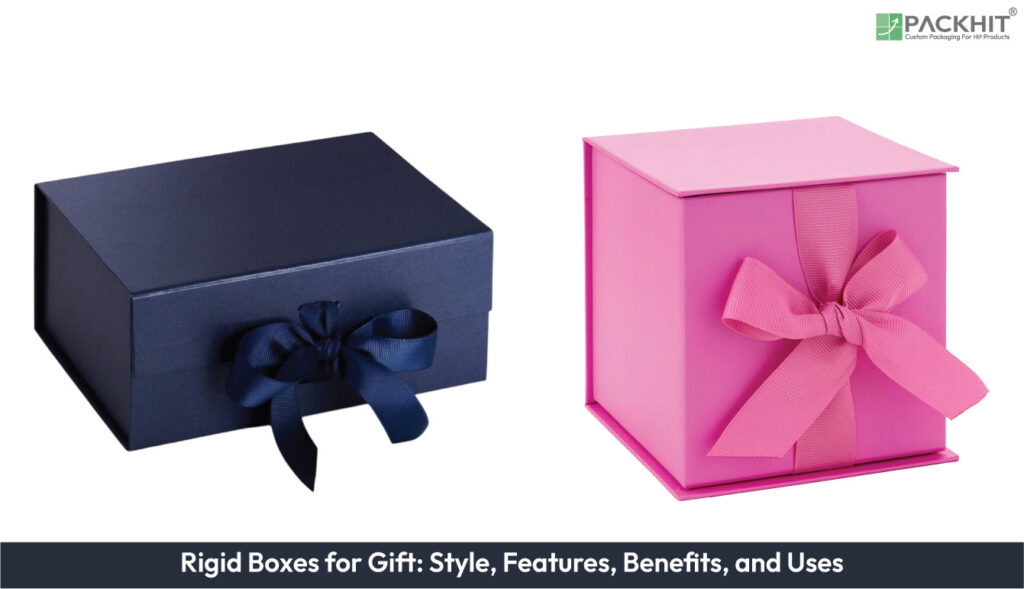
Rigid boxes for gifts are premium, sturdy packaging solutions designed to protect gift items while providing an elegant and high-quality presentation. Made from materials such as chipboard or greyboard, these boxes maintain their shape and can be customized with decorative papers, specialty finishes, closures, and branding elements. They are available in different styles to suit various gift products and presentation requirements, while their durable construction, customization options, and premium appearance provide benefits such as product protection, enhanced brand presentation, memorable unboxing, and increased perceived value. Rigid gift boxes are commonly used across luxury goods, cosmetics and beauty, food and beverage, corporate gifting, electronics, and publishing and collectibles.
Core Features of Rigid Boxes for Gifts
Rigid gift boxes are a packaging format built around a sturdy paperboard structure, commonly using chipboard or greyboard. Board thickness varies by manufacturer, box dimensions, product weight, and intended handling conditions; some specifications may fall around the 1.5-3 mm range, but the appropriate thickness should be selected according to the packaging design rather than treated as a fixed standard.
The board structure is typically covered with decorative paper, fabric, or specialty finishes. This construction gives the box a non-collapsible form and provides a stable base for features such as inserts, closures, and decorative finishes.
Key features include:
- Durability: The rigid board structure helps protect delicate or high-value items during normal handling and transportation. The required board specification should reflect the box size, product weight, and expected handling conditions.
- Customizability: Embossing, debossing, foil stamping, and UV printing allow manufacturers to adapt the exterior to specific branding requirements.
- Premium Aesthetics: Matte or gloss lamination and other decorative finishes can change the visual and tactile character of the package, making them useful when presentation is a major part of the gift experience.
- Non-Collapsible Design: The pre-assembled structure maintains the box’s shape during storage and handling, although excessive compression or unsuitable stacking can still damage the package.
Styles of Rigid Boxes Commonly Used for Gifts
Different rigid box styles suit different product formats, opening requirements, and presentation goals.
Telescope Boxes
Telescope boxes feature a two-piece design with a lid that partially or fully overlaps the base. They are suitable when manufacturers want straightforward access and a classic presentation for products such as jewelry, watches, or high-end electronics. The interior dimensions should provide enough clearance for the product and any required insert.
Magnetic Closure Boxes
Magnetic closure boxes incorporate concealed magnets within the closure. They are useful for premium gift sets, cosmetics, and corporate gifts when repeated opening and a polished closing experience are important. The closure should be matched to the box construction so that the flap aligns correctly without excessive force.
Drawer-Style Boxes
Drawer-style boxes use an outer sleeve and an inner tray that slides outward. They can work well for chocolates, accessories, stationery, and other products that benefit from an interactive opening sequence. Inserts or compartments can be added when individual products need organized positioning.
Hinged Lid Boxes
Hinged lid boxes have a lid attached to the base and open like a book. They are useful for board games, books, collectible items, and gift sets where easy access and a connected lid are priorities.
Shoulder Boxes
Shoulder boxes use an additional inner layer between the lid and base, creating a layered appearance. They can suit luxury perfumes, gourmet products, and other premium gifts where structural detail and presentation are important.
Benefits of Rigid Boxes for Gifts
Key benefits of rigid boxes for gifts include enhanced product protection, premium presentation, memorable unboxing experiences, sustainability options, reuse potential, and increased perceived value.
- Enhanced Product Protection: A rigid paperboard structure and appropriately fitted interior can help limit movement and handling damage. Protection depends on the board specification, box dimensions, insert configuration, and conditions during transportation.
- Superior Brand Presentation: Embossing, debossing, foil stamping, and UV printing provide specific visual and tactile elements that can reinforce brand identity, particularly for premium or gift-oriented products.
- Memorable Unboxing Experience: Soft-touch lamination, metallic foils, custom inserts, and distinctive opening mechanisms can contribute to a more engaging unboxing experience. The effect depends on how these elements are combined with the product and overall package design.
- Eco-Friendly Options: Some rigid boxes can use recyclable or recycled paper-based materials. However, the recyclability of the finished package can depend on coatings, laminations, adhesives, magnets, foams, and other components used in its construction.
- Reuse Potential: A sturdy box may be suitable for later storage or reuse when its structure and interior configuration remain intact. This can extend the useful life of the package, although reuse depends on the product and box design.
- Increased Perceived Value: A non-collapsible structure combined with premium finishes can communicate a higher-end presentation, making rigid boxes suitable for luxury goods, gifts, cosmetics, electronics, and collectible products.
Common Risks of Rigid Gift Boxes
Rigid construction improves structural stability, but the finished package can still experience problems if its components are poorly matched to the application.
- Surface Scuffing: Decorative papers, laminations, or specialty finishes can show marks during repeated handling. A suitable exterior finish and careful handling can help maintain appearance.
- Delamination or Surface Damage: Poorly bonded decorative layers may lift, wrinkle, or separate from the board. Adhesive selection and controlled assembly are therefore important during production.
- Closure Misalignment: Magnetic or hinged closures may not function properly if the lid, flap, or magnetic components are not correctly positioned. Fit and alignment checks should be performed during quality control.
- Product Movement: An oversized interior can allow the gift item to shift during transportation. Inserts, dividers, or fitted cavities can be used when the product requires additional positioning.
- Compression Damage: Although rigid boxes maintain their shape better than folding cartons, excessive external pressure or unsuitable stacking can still deform the structure or damage its finish.
- Finish Wear: Frequent opening, friction, or contact with other packages can gradually affect decorative surfaces. The appropriate finish should therefore reflect the expected handling frequency.
How to Choose the Right Rigid Gift Box?
Manufacturers can select the configuration by considering the product, handling conditions, opening experience, and branding requirements together.
| Gift requirement | Suitable consideration | Main trade-off |
|---|---|---|
| Jewelry, watches, or small luxury items | Telescope or magnetic closure with a fitted insert | More interior customization may increase structural complexity |
| Premium gift sets | Magnetic or hinged-lid construction | Presentation-focused features require careful closure alignment |
| Chocolates, accessories, or stationery | Drawer-style box | The sleeve and tray require sufficient clearance for smooth movement |
| Books, games, or collectibles | Hinged-lid construction | Larger formats require the structure and board specification to match the product |
| Luxury perfume or presentation-focused gifts | Shoulder or magnetic-style construction | Layered structures prioritize appearance and may require more precise assembly |
| Products that move during transit | Inserts, dividers, or fitted cavities | Additional interior components occupy space inside the box |
Start with the product dimensions and handling requirements, then choose the box style based on the primary objective:
- Protection: prioritize appropriate board specification and a fitted interior.
- Easy access: consider hinged-lid or telescope construction.
- Interactive unboxing: consider drawer-style or magnetic closure designs.
- Premium presentation: consider magnetic, shoulder, or specialty-finish configurations.
- Sustainability: evaluate the complete construction, including paperboard, coatings, adhesives, magnets, and inserts, rather than assessing recyclability from the board alone.
This approach helps manufacturers avoid selecting a box solely for appearance when the product also requires specific protection, storage, or handling characteristics.