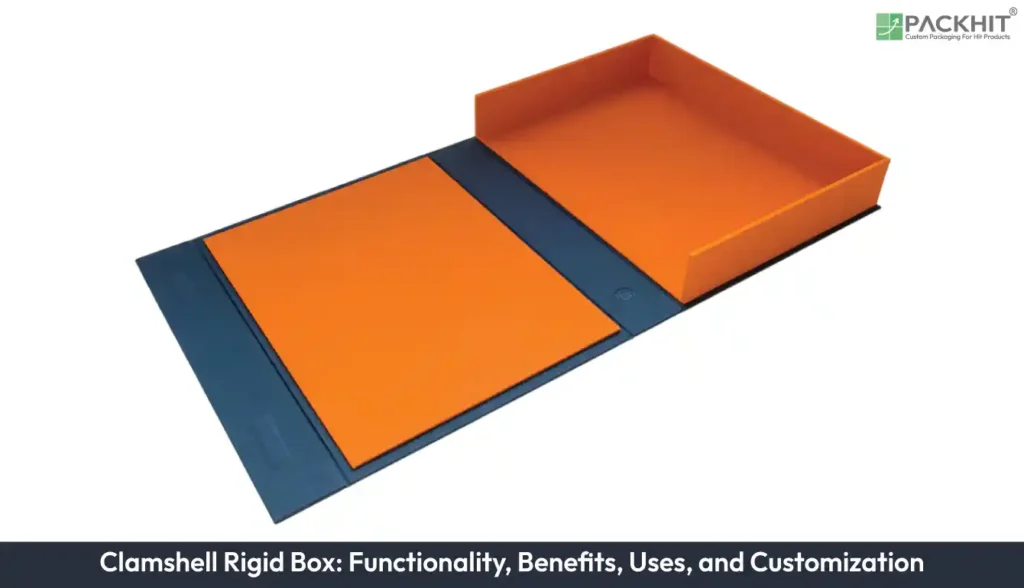
The clamshell rigid box, a subset of rigid packaging solutions, is characterized by its hinged lid design that opens and closes like a clamshell. Clamshell rigid box constructed from durable paperboard materials combines structural integrity with aesthetic versatility, making it a preferred choice for premium product packaging. Clamshell rigid packaging style is widely utilized across industries such as retail, electronics, cosmetics, and luxury goods, where both protection and presentation are paramount. Its customizable features, including size, shape, material finishes, and branding options, allow manufacturers to align packaging with product-specific requirements and market positioning.
What Defines the Structure of a Clamshell Rigid Box?
The structural design of a clamshell rigid box is defined by its hinged lid, which is integrated into the base, creating a seamless opening and closing mechanism. This design is typically achieved using rigid paperboard, a material known for its high density and durability. The box is constructed in a way that ensures a snug fit between the lid and the base, providing both security and ease of use. The edges are often reinforced to prevent wear and tear, while the interior can be lined with materials such as velvet, foam, or molded inserts to enhance product protection and presentation.
The clamshell design is inherently versatile, accommodating various shapes such as rectangular, square, or even custom geometries. The hinge mechanism can be designed as a full-length spine or a partial hinge, depending on the functional requirements. Additionally, magnetic closures or ribbon ties can be incorporated to enhance the user experience and add a touch of luxury.
How Does the Clamshell Rigid Box Function in Packaging?
The primary function of a clamshell rigid box is to combine product access with structural protection. Its hinged lid opens without separating from the base, while the rigid walls help resist compression during handling and storage. Actual protection depends on the complete packaging system: a close lid-to-base fit limits unwanted opening, while die-cut foam, molded pulp, or paperboard inserts can immobilize the product and reduce movement during transit. Resistance to moisture, abrasion, or light depends on the selected board wrap, coating, lining, and other protective layers rather than rigid paperboard alone. Manufacturers should identify the primary exposure risk, such as moisture during storage, surface scuffing from frequent handling, or light exposure, and select the protective treatment according to that specific requirement.
Benefits of Using Clamshell Rigid Boxes
Clamshell rigid boxes combine structural support, presentation, and customization, but their value depends on the product and packaging priorities. They are particularly useful when product stability and presentation both matter; for cost-sensitive, lightweight, or high-volume applications, a simpler packaging format may be more efficient.
- Durability: These boxes are constructed from high-density rigid paperboard, providing exceptional strength. The material resists crushing and external impacts, ensuring the safety of enclosed products during transportation and storage.
- Customizability: Clamshell rigid boxes can be designed to meet specific requirements for size, shape, and material finishes. Branding elements like logos, color schemes, and high-quality graphic printing can be incorporated seamlessly.
- Enhanced Presentation: The hinged lid design allows for a seamless unboxing experience. With options for premium finishing techniques such as foil stamping, embossing, and UV coating, these boxes elevate the perceived value of the product.
- Product Protection: The snug fit between the lid and base, coupled with the availability of custom inserts like foam or molded compartments, keeps products securely in place and minimizes the risk of damage.
- Sustainable Material Options: Recycled-content paperboard, molded-pulp inserts, and paper-based wraps can be considered where sustainability is a priority. Recyclability depends on the complete construction; however, laminations, adhesives, magnets, foam inserts, and mixed-material components may affect how easily the package can enter a paper recycling stream.
- Versatility: These boxes accommodate a wide range of products, from luxury goods to electronics, cosmetics, and even premium food items, making them an adaptable packaging solution.
- Closure Options: Magnetic closures, ribbon ties, and other mechanisms can create different opening and retention experiences. A more elaborate closure is appropriate when repeated use or presentation justifies it; otherwise, a simpler closure may reduce material, assembly, and cost.
Common Uses of Clamshell Rigid Boxes
Clamshell rigid boxes are employed across a diverse range of industries due to their adaptability and premium appearance. In the retail sector, they are commonly used for packaging high-end electronics such as smartphones, headphones, and wearable devices. The cosmetics industry utilizes these boxes for luxury skincare products, perfumes, and makeup kits, where presentation plays a pivotal role in consumer decision-making.
In the realm of luxury goods, clamshell rigid boxes are often chosen for items like watches, jewelry, and bespoke accessories. Their ability to accommodate custom inserts ensures that delicate items are securely housed. Additionally, these boxes are increasingly used in the food and beverage industry for premium confectionery, wine, and gift hampers, where both protection and aesthetics are critical.
How Can Clamshell Rigid Boxes Be Customized?
Customization is a defining feature of clamshell rigid boxes, enabling manufacturers to create packaging that meets specific functional and aesthetic requirements. The customization process typically involves the following elements:
Material Selection
Manufacturers can choose from various grades of rigid paperboard, depending on the desired strength and finish. Options for eco-friendly materials, such as recycled paperboard, are also available.
Exterior Finishes
The exterior can be customized with matte or gloss lamination, foil stamping, embossing, debossing, or spot UV. Each treatment serves a different purpose: Lamination can help protect printed surfaces from scuffing and handling marks, while embossing, foil, and spot UV are primarily used to create tactile or visual emphasis. For frequently handled packaging, manufacturers may prioritize surface durability, whereas display-oriented packaging may place greater emphasis on tactile details, contrast, and highlighting logos or other brand elements.
Interior Design
The interior can use paperboard dividers, molded-pulp trays, foam inserts, or fabric-covered supports depending on the product. A fitted insert immobilizes the item and maintains its position, while cushioning materials can help absorb impact around fragile components. For example, jewelry may require a soft presentation insert to prevent surface contact, whereas electronics may need a precisely fitted tray that limits movement during transportation.
Branding Elements
Logos, brand colors, and other design elements can be incorporated through high-quality printing techniques. This ensures that the packaging serves as an extension of the brand identity.
Closure Mechanisms
Magnetic closures, ribbon ties, or other closure features can be incorporated according to the intended opening experience and security requirements. Magnets can create a controlled closing action, while ribbon pulls or ties can assist opening or add a presentation element. Closure selection should also account for assembly complexity, cost, repeated-use requirements, and material-separation or recycling goals.
Why Are Clamshell Rigid Boxes a Preferred Choice for Manufacturers?
Manufacturers may prefer clamshell rigid boxes when a single format needs to support protection, presentation, and brand differentiation. The hinged structure keeps the lid and base connected, which can improve handling consistency and create a more controlled opening experience. Custom inserts, surface finishes, and closure options also allow the same basic structure to be adapted for different product categories and positioning levels.
The format is most valuable when these added functions justify the higher material, assembly, and finishing requirements. For simpler or cost-sensitive products, lighter packaging formats may be more efficient. Manufacturers should therefore evaluate clamshell rigid boxes based on product value, handling requirements, branding goals, production cost, and end-of-life material considerations rather than treating them as the default premium option.
