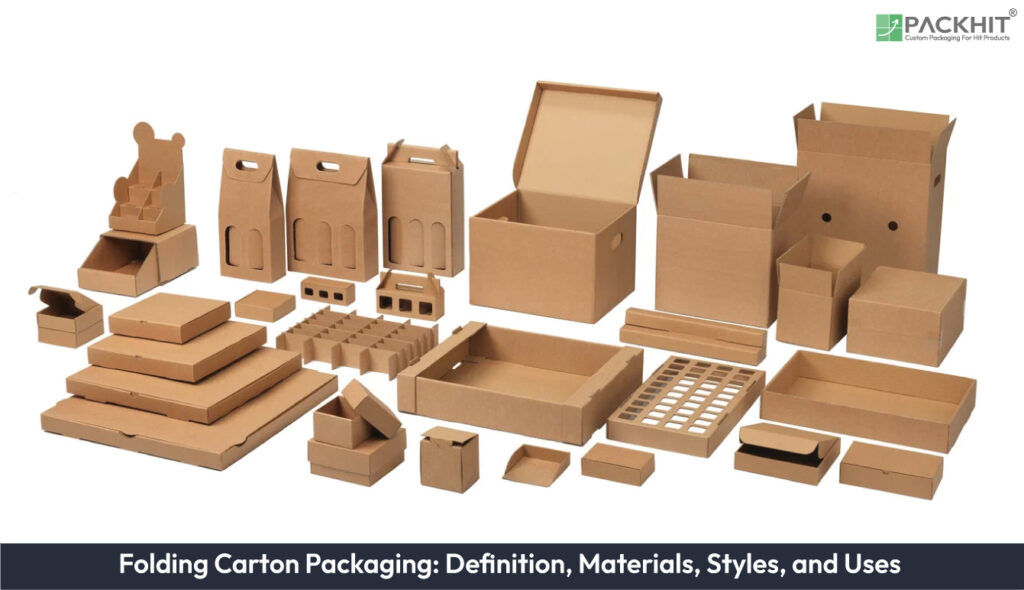
Folding cartons are paperboard packaging boxes that are printed, cut, and shipped flat for efficient storage, then assembled for use. They are primarily made from materials like SBS, CRB, and uncoated paperboard, with optional specialty coatings such as gloss, matte, barrier layers, and foil laminations. Common styles of folding cartons include straight tuck end, reverse tuck end, auto-bottom, and two-piece designs, each tailored for specific product needs. These cartons are widely used across industries such as food and beverage, cosmetics, pharmaceuticals, and consumer electronics. Known for being cost-effective, customizable, sustainable, versatile, and protective, folding cartons can also be reinforced for heavy or fragile products, making them a preferred packaging choice for many businesses.
What is a Folding Carton?
A folding carton is a type of packaging made from paperboard that is cut, folded, laminated, and printed to create a box or container. These cartons are shipped flat to save space and are assembled at the point of use. Folding cartons are known for their structural integrity, ease of customization, and ability to accommodate a wide range of product types.
What Materials are Used to Manufacture Folding Cartons?
The most common materials used to manufacture folding cartons are discussed below:
1. Paperboard Grades
Paperboard is the primary material used in folding cartons, available in various grades:
- Solid Bleached Sulfate (SBS): A high-quality, white paperboard ideal for printing and premium packaging.
- Coated Recycled Board (CRB): Made from recycled fibers, suitable for cost-effective and eco-friendly packaging.
- Uncoated Paperboard: Provides a natural, matte finish for a rustic or eco-conscious look.
2. Specialty Coatings and Laminations
To enhance functionality, folding cartons can include specialty coatings such as:
- Gloss or Matte Coatings: Improve visual appeal and provide surface protection.
- Barrier Coatings: Offer resistance to moisture, grease, or UV light.
- Foil Laminations: Add a metallic finish for luxury packaging.
What are the Styles of Folding Cartons?
Folding cartons come in a variety of styles, each designed to meet specific packaging needs. They are crafted to enhance functionality, durability, and visual appeal, while catering to the requirements of various industries.
The following are the most common styles of folding cartons:
1. Straight Tuck End (STE)
Straight tuck end feature tuck flaps on both ends that fold in the same direction, creating a seamless and professional look. These cartons are ideal for lightweight products such as cosmetics, pharmaceuticals, and small retail items. Their efficient design also supports high-speed assembly lines, making them a popular choice for manufacturers prioritizing productivity.
2. Reverse Tuck End (RTE)
Reverse tuck ends have tuck flaps that fold in opposite directions, offering enhanced structural stability and secure closures. These cartons are commonly used for retail goods like toys, electronics, and food products, and provide a cost-effective packaging solution with a polished presentation.
3. Auto-Bottom
Auto-bottom features a pre-glued bottom that automatically locks into place when the carton is opened, providing robust structural support. This makes them well-suited for heavier items such as jars, bottles, and industrial components. These cartons are also time-saving during assembly, streamlining packaging operations for high-volume products.
4. Two-Piece
A two-piece consists of a separate lid and base, often used for luxury and premium products such as gift items, high-end cosmetics, and specialty foods. Their elegant design enhances the unboxing experience, elevating brand perception. These cartons can be customized with premium finishes, including embossing, foil stamping, and specialty coatings, for added sophistication.
Which Industries Use Folding Cartons?
Folding cartons are an integral part of packaging solutions across numerous industries, such as food and beverage, cosmetics, and pharmaceuticals, due to their versatility, durability, and customizable design.
Below are some key sectors that rely heavily on folding carton packaging:
1. Food and Beverage
Folding cartons are widely used in the food and beverage industry for products such as cereal, frozen foods, and beverages. They provide excellent branding opportunities and can include barrier coatings for food safety.
2. Cosmetics and Personal Care
In the cosmetics industry, folding cartons are used to package items like skincare products, perfumes, and makeup. Their customizable design allows for premium finishes that enhance brand perception.
3. Pharmaceuticals
Pharmaceutical companies use folding cartons for packaging medicines, supplements, and medical devices. These cartons can include tamper-evident features and detailed labeling for compliance.
4. Consumer Electronics
Folding cartons are also used for small consumer electronics such as headphones, chargers, and accessories. They protect during transit and a professional presentation.
The Benefits of Folding Carton Packaging
Folding carton packaging offers numerous benefits, such as cost-effectiveness, customization, sustainability, and versatility, making it a preferred choice for manufacturers.
The key benefits of folding carton packaging are discussed below:
- Cost-Effective: Folding carton packaging minimizes material usage and shipping costs due to its lightweight and space-saving design. Additionally, it reduces storage expenses by allowing manufacturers to ship cartons flat, optimizing inventory management.
- Customizable: These cartons offer extensive customization options, including structural design adjustments (such as window cut-outs and auto-bottom configurations), branding elements like embossing, foil stamping, and printing, and specialty finishes for enhanced aesthetics and functionality.
- Sustainable: Made predominantly from recyclable and renewable materials, folding cartons align with eco-conscious consumer preferences. Manufacturers can also incorporate biodegradable coatings or cellulose windows to further enhance sustainability without compromising product visibility or protection.
- Versatile: Folding cartons are adaptable across industries, serving diverse applications ranging from food packaging with barrier coatings for safety to premium product packaging with magnetic closures or waterfall windows for luxury appeal.
- Enhanced Product Protection: Specialty coatings such as UV protection, moisture resistance, and grease-proofing ensure product integrity during transit and storage, making folding cartons a reliable option for fragile or perishable goods.
- Optimized Assembly: Features like auto-bottom mechanisms and pre-glued designs simplify assembly processes, reducing labor time and operational costs, particularly for high-volume packaging lines.
Can Folding Cartons Support Heavy or Fragile Products?
Yes, folding cartons can be designed to support heavy or fragile products by incorporating reinforced paperboard grades, specialty coatings, and structural enhancements like auto-bottom or two-piece designs for additional durability and protection.
Are Folding Cartons Environmentally Friendly?
Folding cartons are an eco-friendly packaging solution as they are typically manufactured from recyclable and renewable materials. Customization options like biodegradable coatings and cellulose windows further enhance their sustainability.
What Types of Businesses Benefit the Most from Using Folding Cartons?
Folding cartons are highly beneficial for businesses in industries such as food and beverage, cosmetics, pharmaceuticals, and consumer electronics. Their versatility and customization options make them suitable for both functional and branding purposes across these sectors.